






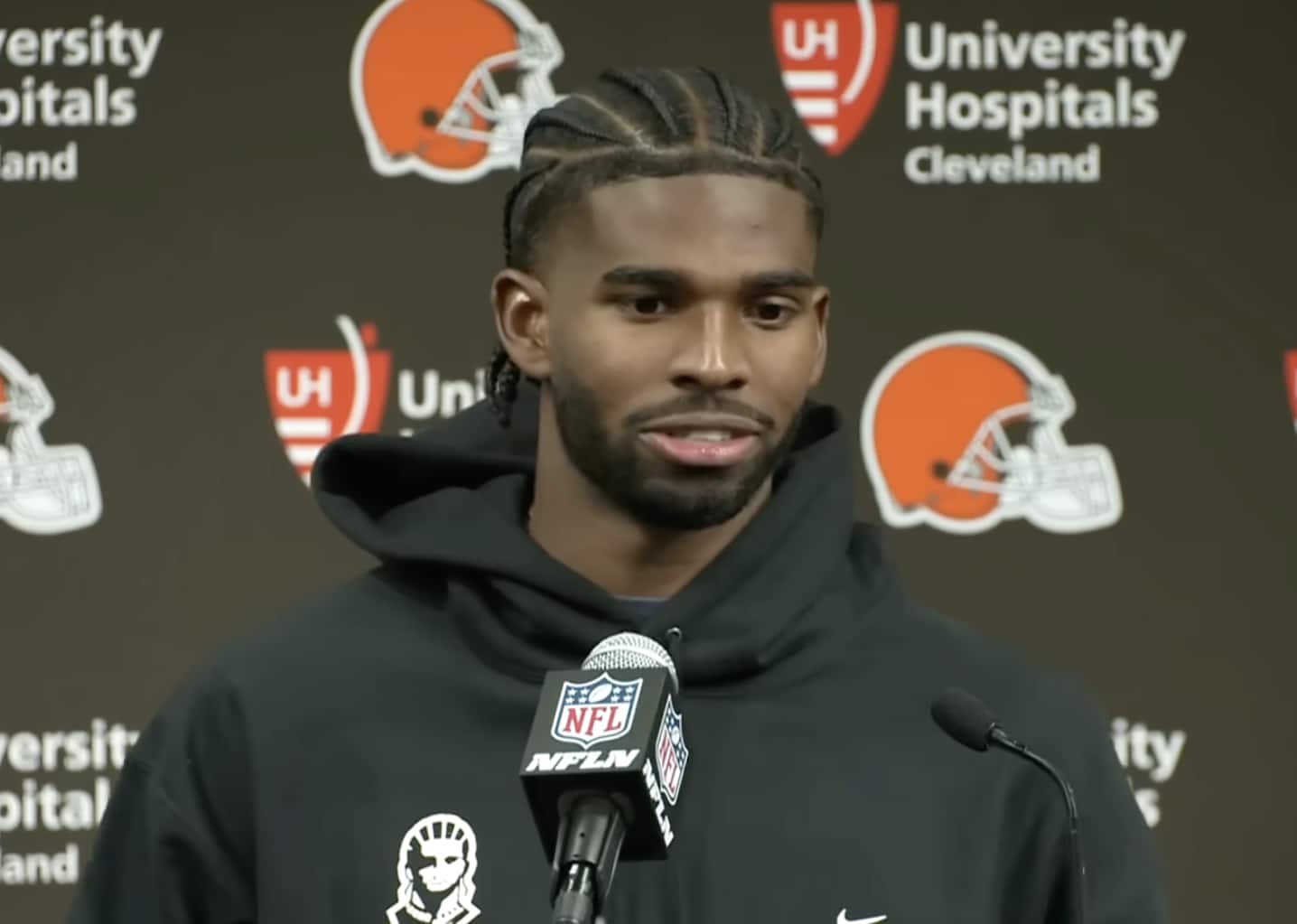
Shedeur Sanders emerged as a massive commercial force during his debut NFL season with the Cleveland Browns. Fueled by a dedicated personal following, the young quarterback generated an unprecedented financial windfall through trading cards, jersey sales, and various licensing agreements. According to the NFL Players Association’s annual report, Sanders earned a record-breaking $17.7 million in group licensing income last season alone. This figure comfortably surpassed the previous single-season record of $9.5 million set by Tom Brady during his stint with the Tampa Bay Buccaneers.
The magnitude of this licensing payout is staggering when compared to other benchmarks. Sanders’ off-field earnings are 170% higher than the 2026 coaching salary of his father, Deion Sanders, at the University of Colorado. Additionally, the licensing revenue far exceeds the total value of his four-year rookie contract, which is estimated at $4.6 million. This highlight’s a growing trend in the modern era where a player’s personal brand and digital footprint can significantly outpace their professional salary.
A primary driver of this success is a fiercely loyal fanbase that has followed Sanders from his time as an All-Big 12 standout with the Buffaloes into the professional ranks. These funds were distributed to Sanders’ entity, SS2 Legendary LLC, through 13 separate payments between May 2025 and February 2026. The largest single payment of $9.2 million was processed shortly after the 2025 NFL Draft. Furthermore, Sanders’ decision to switch his jersey number from No. 12 to No. 2 is expected to trigger another wave of merchandise sales as fans update their apparel.
Cleveland Browns Quarterback Competition and Future Outlook
While his commercial brand is soaring, Sanders’ transition to the NFL field has been a challenging learning experience. Despite what Deion Sanders referred to as a “hellish” initial journey in the league, the former fifth-round pick is currently embroiled in a high-stakes competition for the starting role. Cleveland’s first-year head coach, Todd Monken, has officially categorized the situation as an open battle between Sanders and veteran Deshaun Watson.
During his rookie campaign, Sanders completed 57% of his passes for 1,400 yards, totaling seven touchdowns against 10 interceptions. He added 169 yards and a touchdown on the ground but struggled under pressure, suffering 23 sacks. Playing behind an offensive line that struggled for consistency, his passer rating sat near the bottom of the league rankings. However, Sanders gained significant experience by starting the last seven games of the season after teammate Dillon Gabriel was sidelined by injury.
Coach Monken remains confident in Sanders’ high ceiling, citing the “elite playmaking ability” that was visible on both his college and professional tape. Monken acknowledged that while the young quarterback has a long developmental road ahead, such growth is expected from any first-year player. For his part, Sanders has praised the new coaching staff, noting that Monken and his assistants have brought a revamped energy and a more personal connection to the locker room and weight room.
Summary of Shedeur Sanders’ Impact
Shedeur Sanders has redefined the financial potential for NFL rookies, proving that a strong personal brand can lead to record-shattering licensing revenue that dwarfs traditional player contracts. While his rookie season performance on the field was marked by the typical hurdles of a first-year starter, his playmaking potential and marketability keep him at the center of the Cleveland Browns’ future plans. As he enters an open competition for the starting quarterback job under a new coaching regime, Sanders remains one of the most influential and commercially successful young athletes in professional sports.