













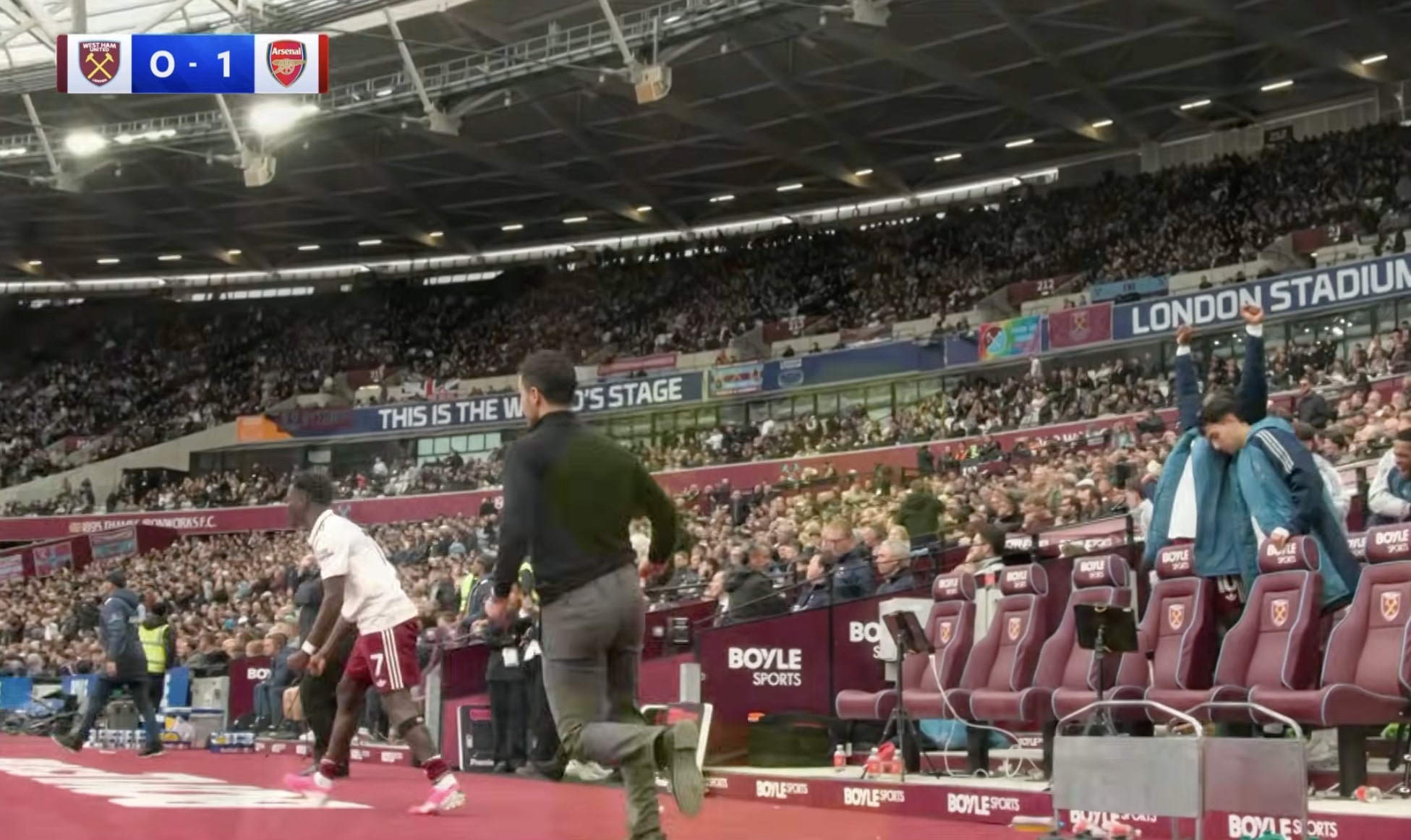

In a high-stakes London derby, Arsenal managed to secure a victory that felt more like a survival act than a statement of dominance. While the result keeps their Premier League title aspirations alive, it was a performance defined by internal struggle and a controversial intervention from VAR. Had Callum Wilson’s late equalizer stood, the post-match narrative would likely have centered on how Arsenal nearly threw away their season through tactical mismanagement and a lack of composure.
A Fortune-Favored Victory for Arsenal’s Title Hopes
The Gunners’ narrow escape was punctuated by a dramatic late sequence that left both managers and fanbases divided. After a grueling four-minute VAR review, Callum Wilson’s strike was disallowed. The officials concluded that Pablo had impeded Arsenal goalkeeper David Raya, preventing him from cleanly contesting the ball. It was a moment of immense relief for Mikel Arteta, whose side had spent much of the second half inviting pressure and self-inflicting chaos.
Arteta was quick to praise the officiating team for their “clarity” under pressure. He noted that while he has been a vocal critic of referees in the past, he felt this specific decision corrected an “obvious error.” For Arsenal, the decision wasn’t just about a single foul; it was a potential season-saving call that kept them in the driver’s seat for the trophy.
The VAR Stalemate: Dissecting the Disallowed Goal
On the opposite side, West Ham manager Nuno Espirito Santo expressed deep frustration over the lack of consistency regarding set-piece physicality. The modern Premier League has become a battleground of “blocking and grappling” during corners, a tactic often mastered by Arsenal themselves. Nuno argued that the line between a strategic block and a foul has become increasingly blurred, leaving players and managers confused.
Ironically, the very tactics West Ham used—positioning a player to disrupt the goalkeeper—are a staple of Arsenal’s own dead-ball playbook. By employing “professional irritants” to crowd the six-yard box, teams have forced officials to use an “atom microscope” on every set piece. In this instance, West Ham’s execution was deemed a step too far, but the debate over what constitutes a foul in a crowded penalty area continues to simmer.
Arteta’s Tactical Gamble Amid Injury Chaos
Arsenal’s struggle to control the match was exacerbated by a series of injuries to key defenders. The early exit of Ben White forced a defensive reshuffle that saw Declan Rice, arguably the league’s premier midfielder, moved to right-back. This adjustment backfired, as West Ham found newfound joy attacking the flanks, forcing David Raya into several high-quality saves to maintain the deadlock.
The situation worsened when Riccardo Calafiori was unable to continue after halftime. Arteta’s response included a brief and puzzling cameo for Martin Zubimendi, who was brought on to stabilize the midfield only to be substituted 39 minutes later. While the manager defended the move as a tactical necessity to introduce more attacking intent, it highlighted the fragile state of the Arsenal lineup as they navigated the pressure of the title race.
Captain’s Composure: Odegaard Sparks the Breakthrough
When the system faltered, Arsenal relied on individual brilliance to find the breakthrough. Martin Odegaard, often the heartbeat of the team, stepped up during the match’s most frantic period. Despite the surrounding disorder, Odegaard took control of the tempo, eventually slicing through the West Ham defense with a perfectly weighted pass to Leandro Trossard. Trossard’s clinical finish provided the one bit of quality Arsenal needed to secure all three points.
Following the goal, Arsenal retreated into a deep defensive shell. They completed remarkably few passes in the final minutes, opting instead to rely on their low-block resilience and a bit of luck. While this “win at all costs” mentality is often the hallmark of champions, it was a high-risk strategy against a West Ham side that felt they deserved at least a point for their efforts.
Key Takeaways: Winning Ugly in the Final Stretch
As the Premier League season reaches its climax, the aesthetic quality of a performance matters far less than the points on the board. Arsenal demonstrated that they can survive their own tactical errors and injury setbacks to grind out a result. Moving forward, the focus will remain on their ability to manage games without relying on lengthy VAR interventions. For now, the Gunners have navigated a significant hurdle, proving that even when they aren’t at their best, they have the grit—and perhaps the luck—required to stay in the fight for the title.