

















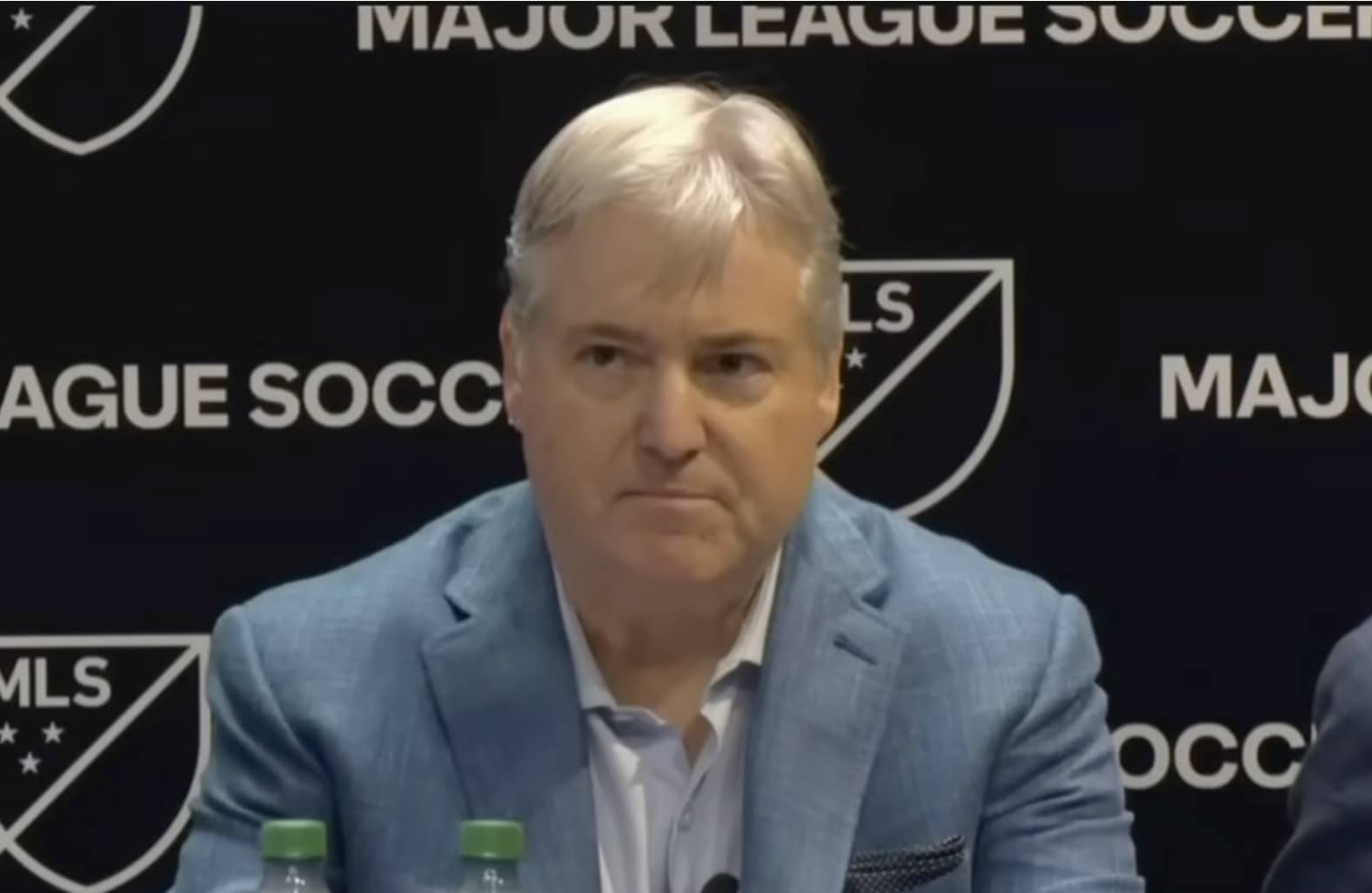
The dawn of a new era for Major League Soccer has arrived. Larry Berg and Don Garber now share a unique milestone: both were introduced as the incoming commissioner of the league on the same calendar day, though the 27-year gap between their appointments highlights the massive evolution of North American soccer. As Garber prepares to hand over the reins, he emphasized that the focus is entirely on the road ahead rather than reflecting on the league’s three-decade history.
Berg, a prominent figure in private equity and a co-owner of LAFC since its 2014 inception, will officially take the helm on January 1. To ensure a smooth transition and maintain league integrity, Berg will divest his interests in the Los Angeles club before assuming his new role. The league he inherits is a far cry from the fragile entity Garber took over in 1999. Today, MLS enjoys financial stability, a robust infrastructure, and a soccer-literate fan base that was well-established long before the recent World Cup fervor. Garber described Berg—a lifelong fan of the game—as the result of decades of sustained investment that turned a struggling ecosystem into a premier professional operation.
Despite these successes, Berg faces a significant existential challenge: the quest for broader relevancy. While MLS has secured global icons like Lionel Messi, it still finds itself competing for attention against both the major American sports leagues and the traditional powerhouses of European soccer. The central question for Berg’s tenure will be how to elevate the league’s status from a niche interest to a mainstream powerhouse.
Prioritizing On-Field Excellence as a Growth Catalyst
According to Bennett Rosenthal, an LAFC co-owner and part of the succession committee, Berg has consistently championed a vision centered on improving the quality of play. Berg argues that the standard of the product on the pitch is the primary lever that will solve the league’s relevancy issues and unlock new financial opportunities.
Berg’s strategy involves a “flywheel” effect: strategic investments in rosters lead to higher transfer revenues and more lucrative media contracts. This capital can then be reinvested into the product, further enhancing its quality. Achieving this will require consensus among the league’s 30 ownership groups regarding the evolution of roster spending rules. Having previously co-chaired the sporting competition committee, Berg is intimately familiar with the league’s complex regulations and intends to use his private equity background to find creative solutions that allow owners more flexibility in how they build their teams.
A cornerstone of this vision is youth development. MLS academies have already become a vital pipeline for the U.S. and Canadian national teams, with many prospects moving to elite European leagues. However, Berg believes there is still untapped potential. He aims to increase playing time for younger talents at the highest levels, ensuring that MLS continues to drive the progress of North American soccer on the international stage, with the ultimate goal of winning major trophies like the World Cup and the Olympics.
Redefining League Formats and Future Media Strategies
Berg’s leadership will coincide with a historic shift in the MLS calendar to a fall-to-spring schedule, aligning the league with the global soccer market. This transition provides a natural window to re-evaluate competition formats, including the structure of the regular season and the playoffs. While the league has experimented with various postseason models, Berg is focused on finding a format that balances sporting merit with high-stakes entertainment to keep audiences engaged.
The entertainment value of these formats will be crucial for the next round of media rights negotiations. The current exclusive partnership with Apple TV runs through 2029, and while it provided stability, the paywall-centric model has limited the league’s reach. As the expiration date approaches, Berg aims to secure a deal worth between $400 million and $500 million annually—a significant jump from the current $250 million. He views potential media partners as collaborators who will help “co-create” the future of the league, using innovations like the Leagues Cup and revamped playoffs to attract a wider audience.
Leveraging Private Equity Experience for League Governance
While the role of private equity in professional sports has come under scrutiny, Berg views his professional background as a distinct advantage. His experience at firms like Apollo Global Management and 26North has equipped him with the skills necessary to manage complex governance structures and build consensus among 30 diverse owners.
Columbus Crew owner Jimmy Haslam noted that Berg’s role is not about the traditional “takeover” model of private equity, but rather about utilizing capital and strategic urgency to drive value. Berg himself emphasizes that his career has been defined by a sense of urgency and the ability to align various stakeholders toward a singular objective. By working alongside the experts already within the MLS league office, Berg plans to apply his governance expertise to ensure the league moves forward as a unified and competitive entity.
Final Thoughts
Larry Berg steps into the commissioner’s office at a pivotal moment. With a foundation of stability and infrastructure already in place, his success will be measured by his ability to improve the quality of play and bridge the gap between MLS and the world’s most popular sports leagues. By focusing on roster innovation, youth development, and strategic media partnerships, Berg aims to transform Major League Soccer into a top-tier global competitor during its next chapter of growth.